













The role of battery voltage in forklift batteries: what you need to know
Battery voltage is essential for the performance of forklifts. Especially in warehouses and logistics, stable voltage determines how reliable and powerful your forklift operates. In this blog, you will learn what battery voltage entails and how to extend the lifespan of your batteries.
What is battery voltage and why is it important?
Battery voltage, expressed in volts, represents the electrical potential difference between the positive and negative terminals of a battery. Battery voltage determines how much current it can deliver. Higher voltage means more power, which is essential for heavier applications such as forklifts. Too low voltage can lead to reduced performance, while too high voltage can cause damage. Remember: Voltage determines power, capacity (Ah) determines operating time.
How does battery voltage work in lead-acid batteries?
Lead-acid batteries are the most commonly used forklift batteries. They consist of cells with lead plates and sulfuric acid, which together generate voltage through chemical reactions. Each cell provides approximately 2 volts. If the voltage is insufficient, forklift performance drops rapidly, which is why regular voltage checks are important.
Practical tips for optimal battery voltage
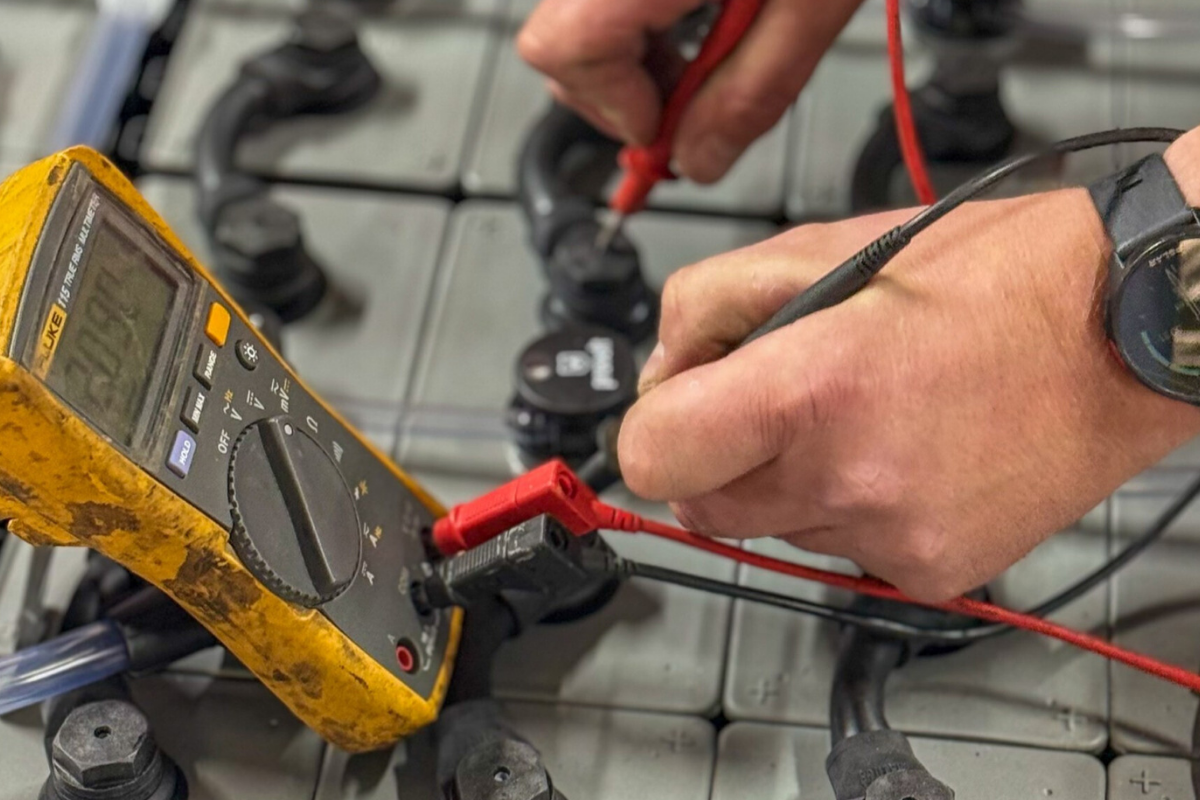
- Stable battery voltage begins with correctly measuring the voltage. Use a reliable voltmeter for this and measure the voltage regularly, especially before use and after charging.
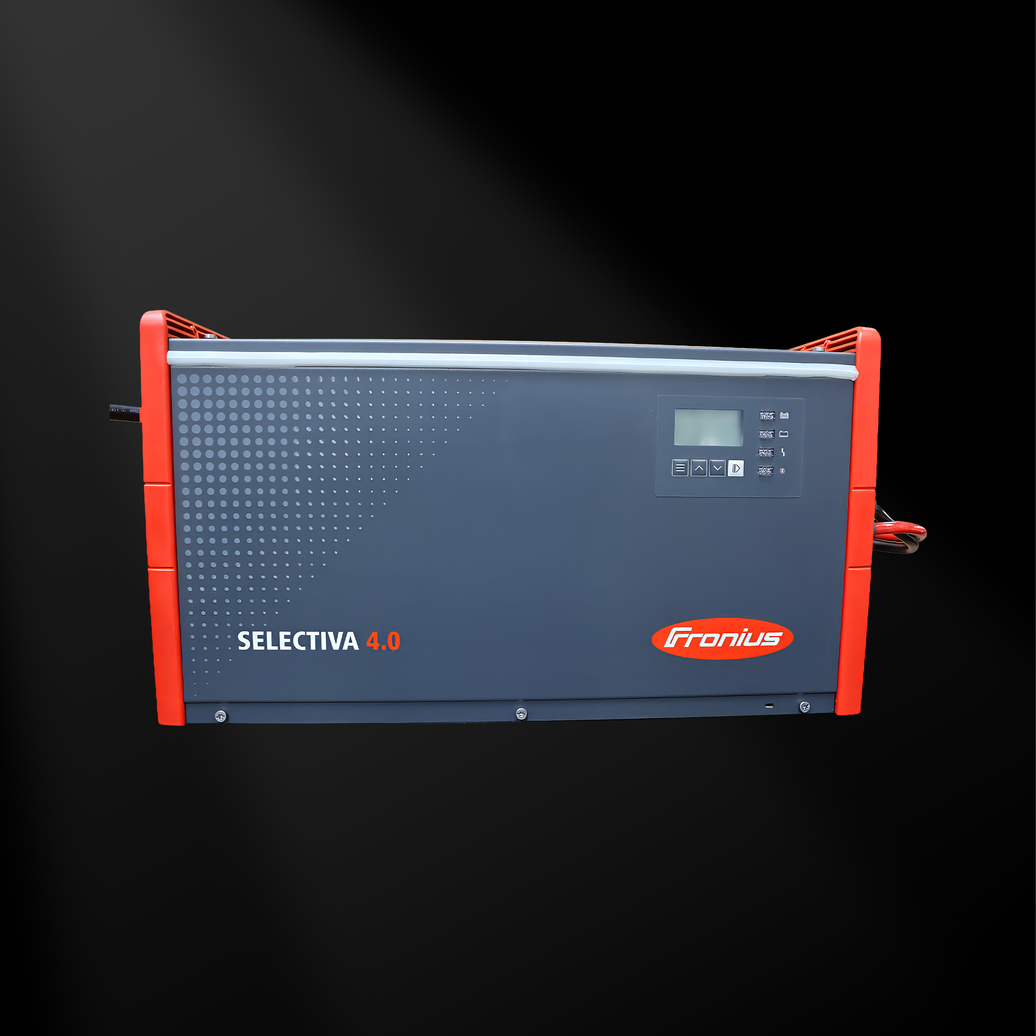
- Always ensure you use the correct charger that matches your forklift battery's voltage. For lead-acid batteries, this means a charger compatible with the voltage level and one that does not overcharge the battery. Regular maintenance, such as checking fluid levels in lead-acid batteries, helps keep the voltage stable.
Innovations in voltage management for forklift batteries
New technologies help manage battery voltage. A good example is the Battery Management System (BMS), which automatically monitors and adjusts voltage and temperature.
Quasar technology goes even further. Not only do the chargers intelligently adjust the charging process, but the battery itself also benefits. The technology prevents overcharging and deep discharge, reduces wear and tear, and optimizes internal voltage balance. As a result, the battery remains powerful longer, retains capacity, and delivers consistent performance, even with intensive use.
Conclusion: Smart voltage management for sustainable results
Stable battery voltage is essential for safe and powerful performance of your forklifts. By regularly checking the voltage and investing in the right battery technology, you significantly extend the lifespan of your batteries and prevent unnecessary downtime.
Let our experts advise you without obligation,
Curious which battery technology best suits your forklift fleet?
Request personal advice now and discover how to achieve maximum performance and durability from your batteries.
Frequently Asked Questions (FAQ)
1. How often should I check the battery voltage on my forklift?
Check the voltage at least weekly, especially with intensive use. When in doubt, always measure after charging.
2. What is the difference between battery voltage and battery capacity?
Battery voltage (volts) determines power, while battery capacity (Ah) indicates how long a battery can supply current.
3. Can battery voltage affect charging time?
Yes, lower voltage can lead to longer charging times. The condition of the battery and charger also plays a role.
4. When is battery regeneration useful for voltage problems?
Battery regeneration is particularly suitable for voltage loss due to sulfation in lead-acid batteries. This can often give them a second life.
5. Which charger is best for my type of traction battery?
Always use a charger that matches the voltage and type of battery.

Leave a comment